

How to set up a drying room
A Mareşal machine runs as a closed loop: it turns the moisture it takes from the room into water and returns dry air. The efficiency of that loop depends on the room itself. Carpet, food, cardboard or textile — whatever you dry, the four rules below apply.
1. Room insulation
Ceiling, floor, walls and door are insulated. The aim is twofold: keep the heat the machine produces inside and block the cold coming through outside walls. Use compressed polystyrene or sandwich panel; tape the joints, leave no gaps.
2. Air tightness
The room stays closed while the machine runs. Air leaking in is cold and humid; the machine has to deal with that new moisture too, the product dries later and power consumption rises. Close windows, vents and gaps under the door; open the room only for loading and unloading.
3. Hard floor
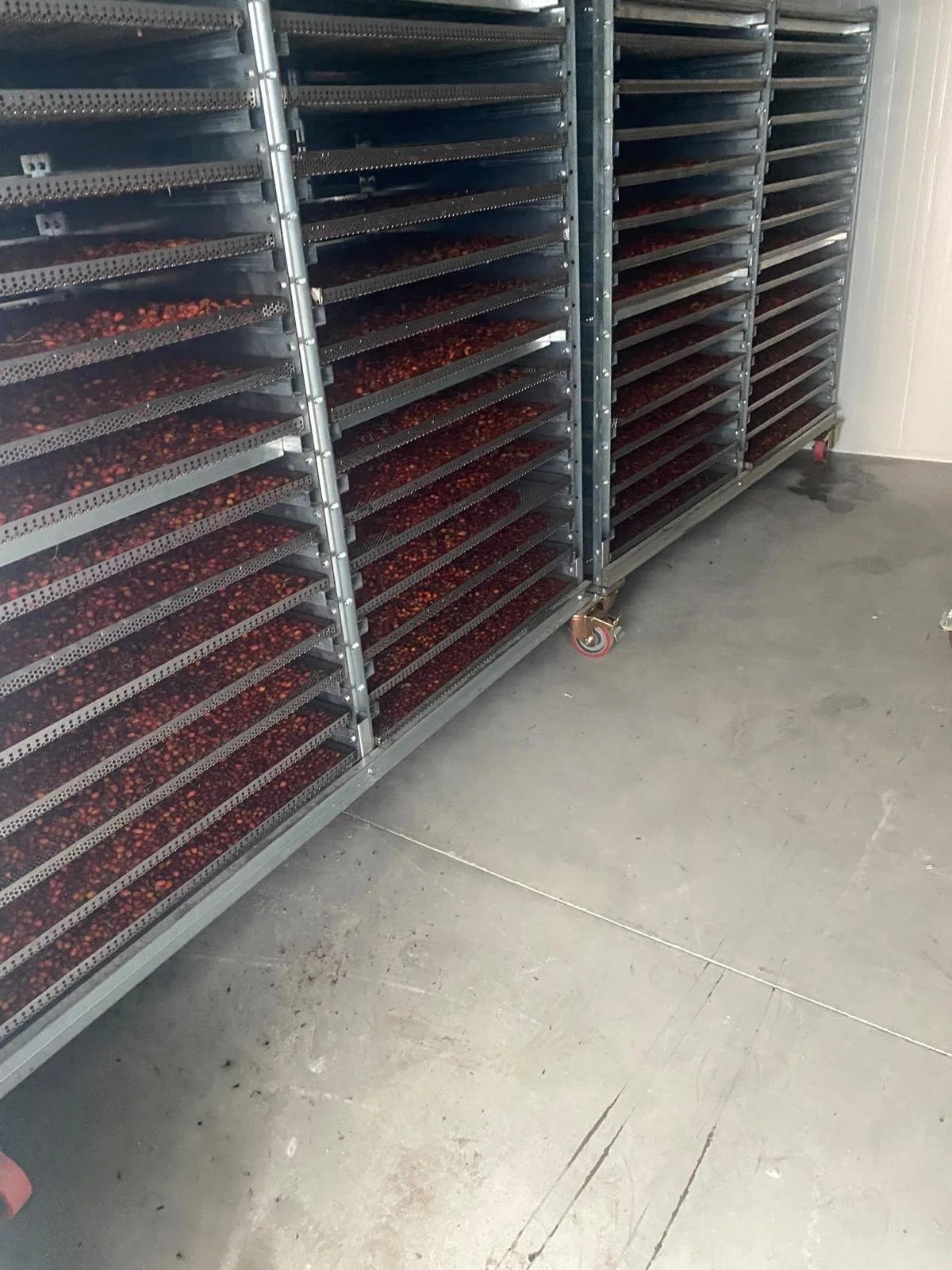
The floor must be hard, flat and non-absorbent: concrete, sandwich panel or tile. Soil or absorbent floors give moisture back and lengthen the cycle. A wheeled machine positions easily on a flat floor; keep its back away from the wall and leave the air inlet and outlet clear.
4. Full drying
Do not open the room before the target humidity is reached. The machine stops itself when the humidity sensor reaches the target or the timer runs out; half-dried product takes moisture back on the shelf. Target humidity and time are set per product on the digital panel.
Rack and hanger layout
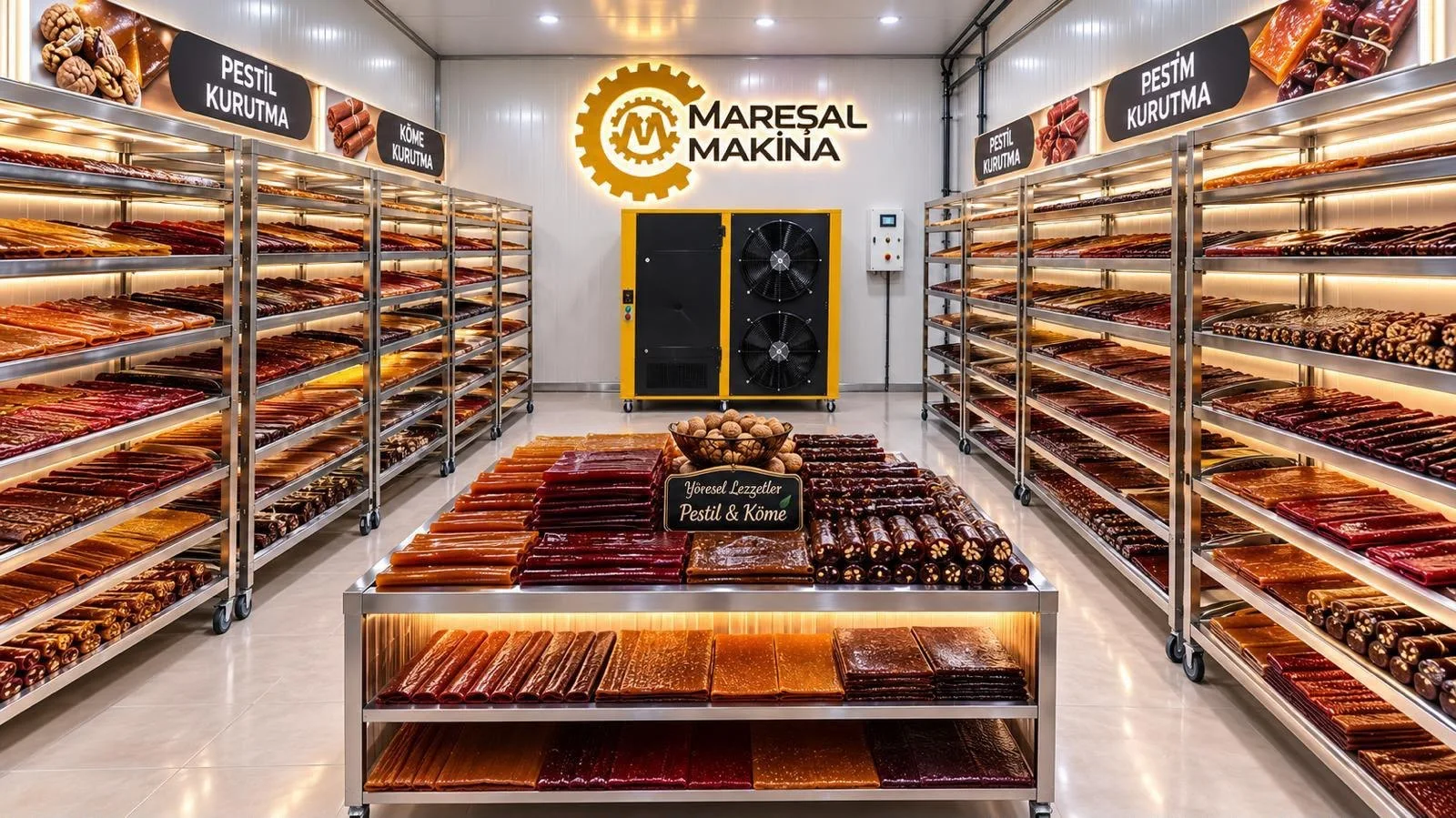
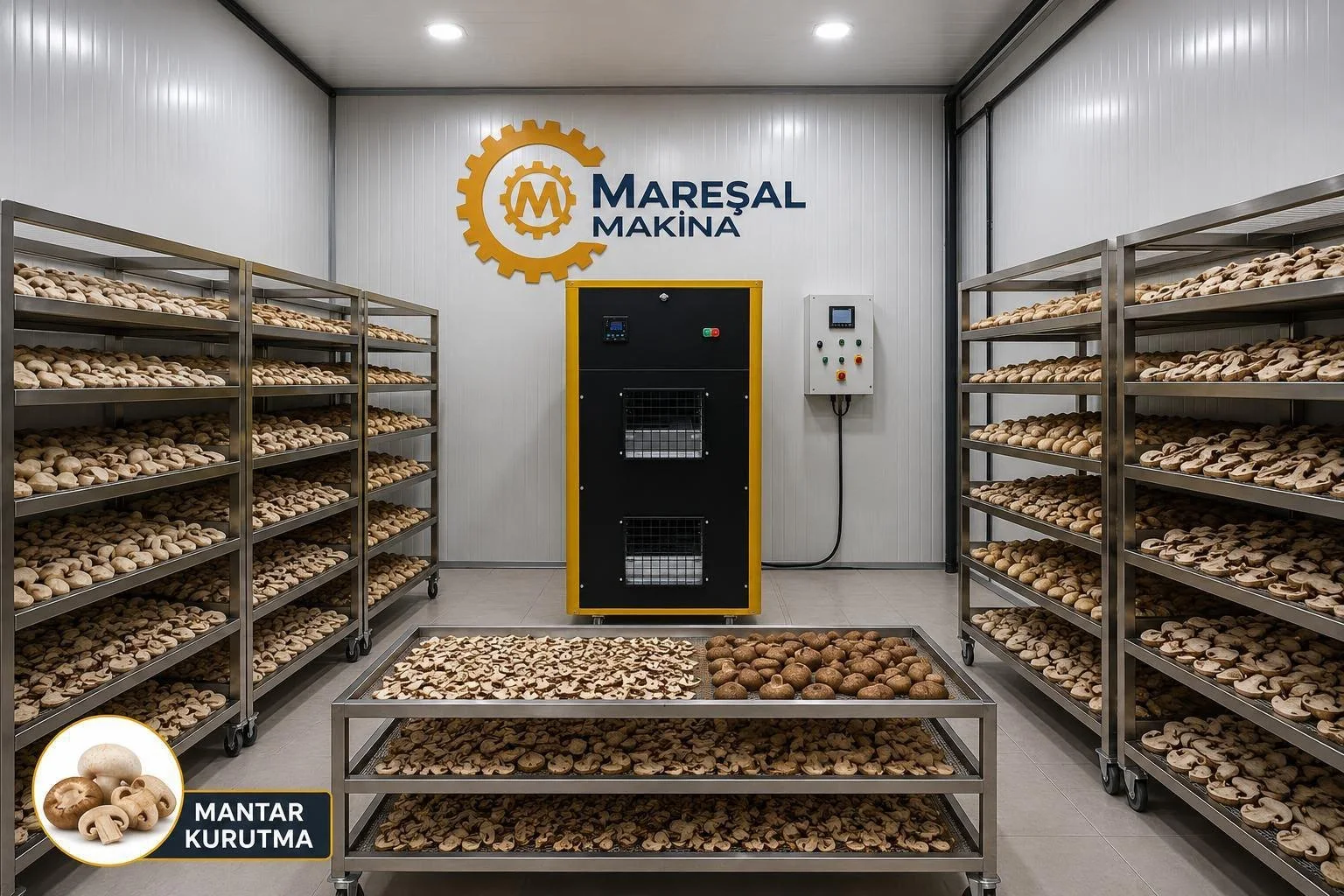
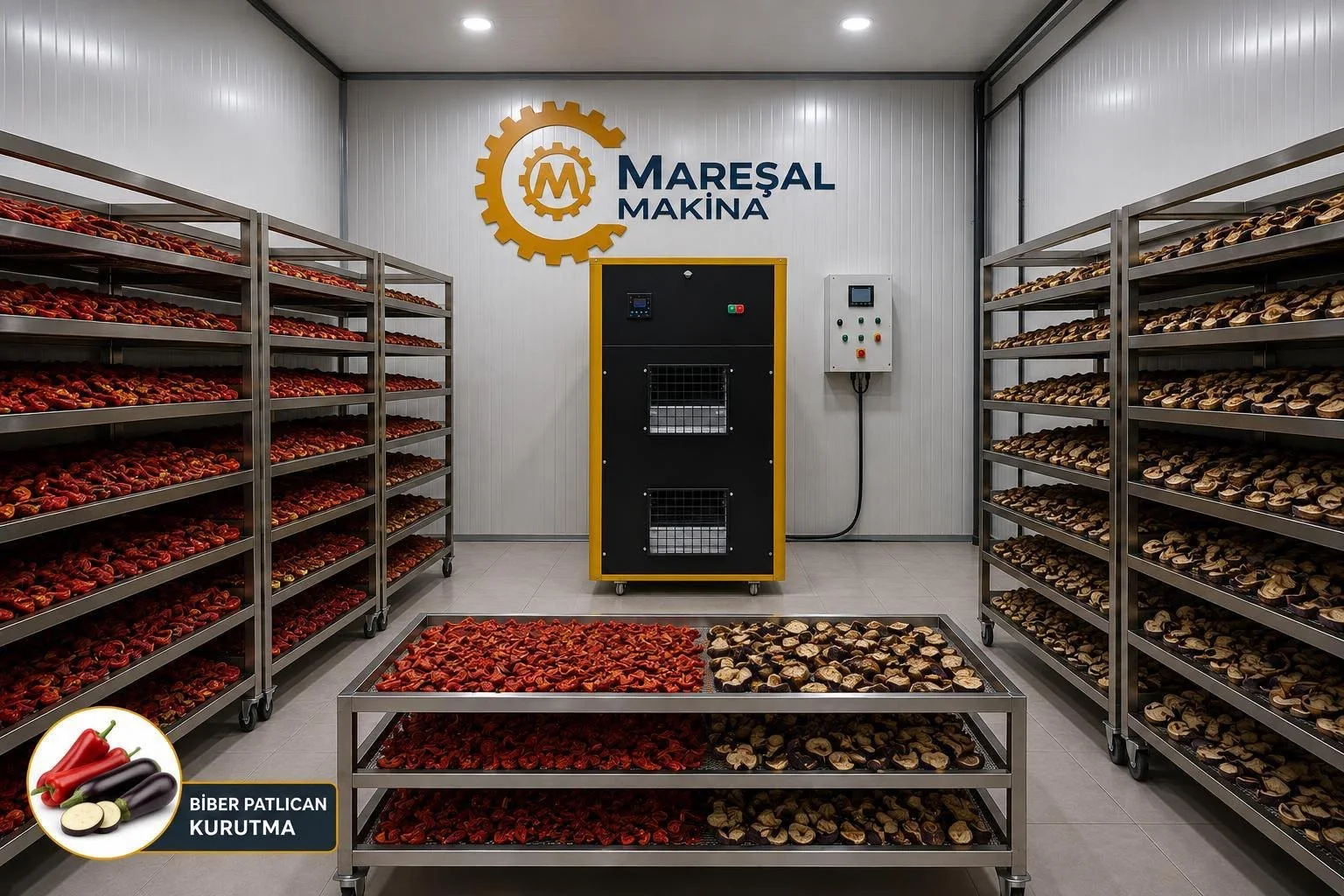
- Set racks and hangers parallel to the machine’s airflow and leave an air corridor between them.
- Spread the load evenly across the whole room; no empty corner and no crowded corner.
- Clean the washable dust filter every batch and the rear coils once a week.
Write your room size and product; we prepare the model and room-layout recommendation together. Get a Quote
Guide articles
Tell us what you dry; we recommend the right machine.
Write your room size and product; we call you back during working hours.